For most independent visitors, a GO train from Toronto Union Station combined with WEGO transport in Niagara Falls is the simplest starting point. Book around the actual train schedule, not just a package price. The Niagara station is not the waterfall viewpoint, and a cheap journey can become awkward when the final transfer or return departure is overlooked.
Choose the whole journey, not just the train
GO's official Niagara guidance offers direct trains and a connecting alternative: take a Lakeshore West train to Burlington, then route 12 to Niagara Falls Bus Terminal. The bus terminal is across from the Niagara rail station, so neither version removes the need to travel onward to the main visitor area. [1]
Start your search from Union Station to Niagara Falls GO for the actual travel date. Compare a direct journey with the connecting option and note the final arrival time, rather than comparing only the first departure from Toronto. A bus connection can be useful when the direct train's timing does not fit.
Then plan the return. Leave room to travel back from the falls, find the platform or bus stop and handle a missed local connection. The last attraction booking of the day should not end at the same time you need to leave the visitor area.
For a short first visit, prioritize seeing the falls and one substantial activity. A timetable that allows that comfortably is more useful than a faster outward departure followed by a very early return. Add Niagara-on-the-Lake only when the additional transport genuinely fits; it should not be treated as another stop beside the falls.
What the GO–WEGO packages actually include
Niagara Parks publishes different weekday and weekend transport packages. The observed prices are in Canadian dollars and include return GO travel with local WEGO access; they are not attraction passes. [2]
| Package | Weekday | Weekend | Main local transport included |
|---|---|---|---|
| One-day | CA$34 | CA$22 | One-day WEGO access |
| Two-day | CA$40 | CA$35 | Two-day WEGO and Falls Incline Railway access |
Choose the product for your actual travel pattern. A two-day package is potentially useful for an overnight stay, but paying for another day makes little sense when you will leave before using it. Read the purchase instructions for validity and activation rather than treating a ticket bought today as already active.
A useful comparison is the separate fare. GO advertises a CA$10 one-day weekend travel pass, while Niagara Parks lists adult 24-hour WEGO at CA$16. On those published figures, separate purchases total CA$26, compared with the CA$22 weekend combination: a calculated CA$4 difference per adult, or CA$8 for two. The calculation assumes both travelers qualify for the quoted adult products and need WEGO. [3] [4] [2]
Someone who will not use local buses should compare the GO-only option instead. Conversely, buying a regional rail pass does not automatically create a WEGO entitlement. Avoid paying twice because a booking confirmation was not read carefully.
The local transfer is part of the day
WEGO connects the station area with Niagara Parks locations and major visitor districts. Its routes meet at Table Rock Centre near the Canadian Horseshoe Falls. The operator now includes the Niagara-on-the-Lake Orange Line shuttle within a WEGO pass, with a transfer at the Floral Clock, but the route's operating schedule still determines whether it is useful on your date. [4]
Do not interpret an included route as an always-available departure. Check the local timetable alongside the Toronto connection, especially on a short autumn or winter visit. A separate outing to Niagara-on-the-Lake can consume the time you intended to spend near the falls.
Keep your local ticket accessible before boarding. Save a copy of the return train or bus details offline and identify a backup pickup point for a taxi. With children or mobility needs, reduce the number of changes rather than trying to extract maximum theoretical value from every included service.
An autumn closure affects the two-day package
The Falls Incline Railway is closed for maintenance from October 26 through November 6, 2026, with reopening planned by November 7. During the closure, Niagara Parks advertises a WEGO shuttle between the top of the incline railway and Table Rock from 09:00 to 21:00. [5]
This is a practical reason to examine inclusions instead of choosing the longer package automatically. During those dates, the included railway is not operating as a railway. The substitute shuttle may still provide the connection you need, but it is a different experience and has its own operating window.
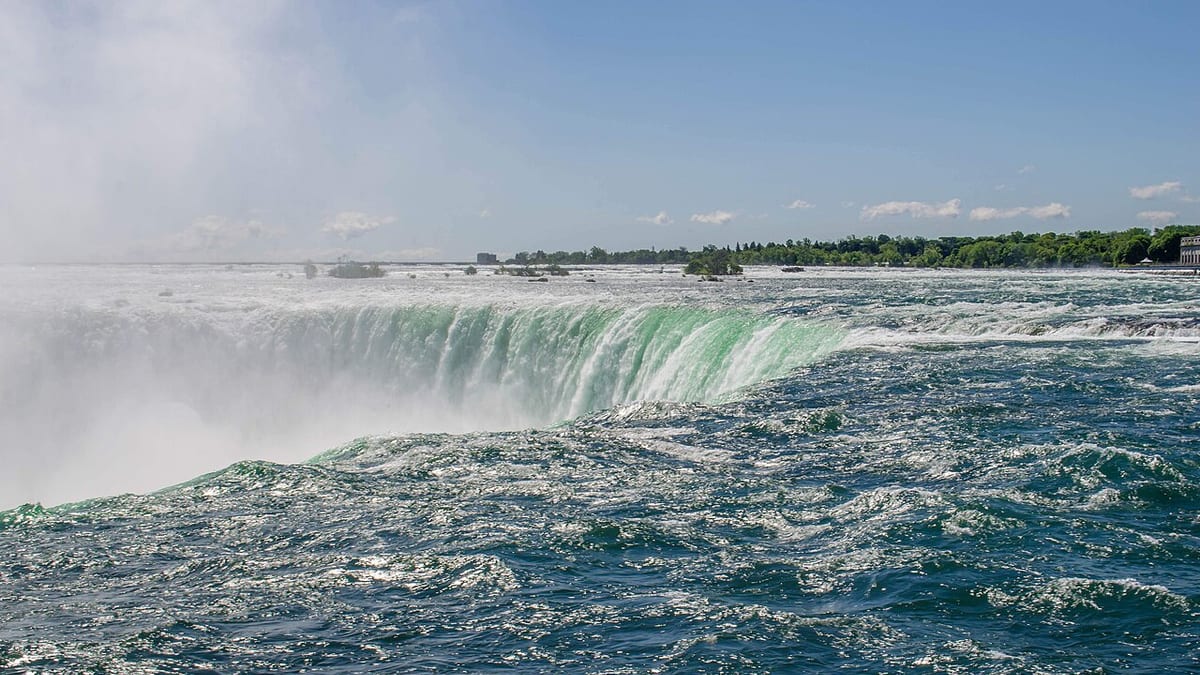
The closure is not a closure of Niagara Falls. A traveler mainly interested in the outdoor views may barely need the incline at all. Someone staying above the escarpment, however, should plan the hotel-to-Table-Rock connection rather than discovering the change after dinner.
Driving and tours solve different problems
Driving gives the greatest flexibility for several stops or a rural overnight stay. Compare the full cost: rental, fuel, parking and the inconvenience of moving the car between places. A low fuel estimate alone is not a fair comparison with a return public-transport ticket.
Use the live road journey from your actual Toronto starting point. An airport hotel, a downtown hotel and a suburban home are not the same origin. Build in a buffer before a timed activity; a road estimate is not an arrival guarantee.
A guided coach excursion can be sensible when you want one booking and a defined itinerary. Before paying, identify the pickup address, included attraction admissions, meal arrangements and actual time at the falls. "Niagara tour" is not a standardized product, and an inexpensive trip may leave the most important admission as an extra.
For travelers who prefer to linger, an overnight stay is often more valuable than adding more activities to a crowded day trip. It separates the outward and return journeys and leaves room for weather to improve. The trade-off is accommodation cost, not just a higher transport ticket.
Keep construction notices in their proper date range
Lakeshore West construction can replace parts of a train journey with buses. The official notice available during this check describes completed work on October 17–18 and October 24–25, 2026. Those dates should not be presented as a permanent closure or automatically applied to your later trip. [6]
Use the operator's current planner immediately before departure and follow the instructions for that specific disruption. A package remains a fare product, not a promise that every segment will operate by train.
The strongest plan is therefore a complete sequence: Toronto departure, Niagara arrival, local connection, a manageable visit and a return with breathing room. Once that sequence works, choose the cheapest ticket that actually covers it. Reversing those steps is how an attractive headline fare becomes a rushed and frustrating day.