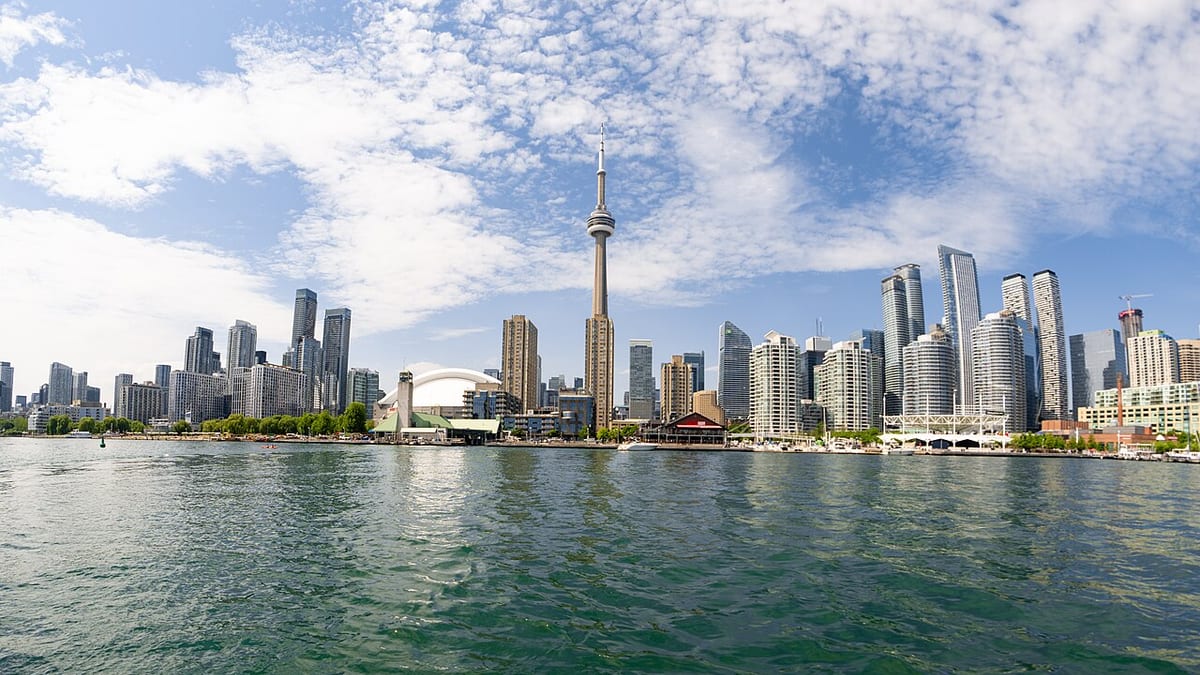
Toronto in November works best as a culture-and-neighbourhood trip with outdoor time chosen around the forecast. Pack for cool, damp conditions and keep a substantial indoor plan for each day. In 2026, the Royal Agricultural Winter Fair runs from 6–15 November, while the city's concert and gallery programmes give you reasons to visit beyond the weather. [1][2]
What the weather averages do - and do not - tell you
Environment and Climate Change Canada's 1991–2020 normals for the Toronto City station give November a mean temperature of 5.2°C, with an average daily high of 8.1°C and low of 2.3°C. These are long-period averages at a particular station, not a forecast for your travel dates or a guarantee that every night stays above freezing. [1]
Use that information to plan layers. A warm middle layer and a weather-resistant outer layer are more adaptable than clothes chosen for one exact temperature. Add comfortable footwear that can cope with wet pavement, and bring a hat and gloves if you expect long periods outdoors or are sensitive to the cold.
The difference between walking and standing is important. An active neighbourhood stroll may feel comfortable in clothing that is insufficient for waiting outside or watching an event. Pack for the slowest part of the day, not only the most energetic one.
Keep an indoor place in mind before you need it. A café, gallery or museum that genuinely interests you is a better adjustment than abandoning the day after getting cold. November travel rewards a sequence of manageable outdoor sections rather than an uninterrupted all-day walk.
The Royal: a specific reason to choose early November
The Royal Agricultural Winter Fair is scheduled at Exhibition Place from 6 to 15 November 2026. The organizer's programme combines agriculture, food and equestrian events. Decide whether you want general fair browsing or a particular horse-show performance before selecting a ticket. [2]
Those are different experiences, and a general admission description should not be taken as proof that every separately scheduled performance is included. Read the product attached to your chosen session. Families may prefer a broad daytime visit, while an equestrian enthusiast may want to build the day around one competition.
GO Transit lists Exhibition Station as the relevant nearby station and advertises a GO-plus-fair combination product for the 2026 event. Its displayed adult combination price is CA$47.48 including taxes and fees. Compare that with the journeys and admission you actually need rather than assuming a bundle saves money for every starting point. [3]
For visitors already staying nearby, the transport component may add little value. For someone arriving by GO, it can simplify the arrangement. The useful comparison is the full trip, not just the price printed on the fair ticket.
Use galleries to structure a wet day
The Power Plant at Harbourfront offers free admission and lists opening Wednesday–Sunday, 11am–6pm. It makes a useful indoor anchor when you want contemporary art without committing to a large admission budget. Its programme changes, so choose it because the current exhibition interests you, not merely because the building is available. [4]
MOCA provides a different west-side option. Its regular adult admission is CA$14, while its first floor is always free and selected community periods offer broader free access. Those conditions are not interchangeable: a free ground-floor visit does not mean every exhibition floor is free every day. [5]
Pair one main cultural visit with lunch in the same broad area. That creates a coherent day and reduces unnecessary journeys in poor weather. Two substantial museums may be possible, but they are not automatically more satisfying than one carefully chosen visit with time to absorb it.
Avoid using Monday as a default gallery day without checking individual schedules. Small galleries and museums often have different closed days, and a district full of cultural addresses is not proof that they are all open together.
Saturday markets still belong in the plan
Evergreen Brick Works' Saturday Farmers Market continues through winter, moving into the TD Future Cities Centre from November to April. That makes it a useful November option rather than a summer attraction that has disappeared from the calendar. [6]
Give it a morning rather than trying to arrive after a long brunch elsewhere. Browse with an appetite and choose purchases that fit your accommodation and travel plans. A visitor without a kitchen may get more from prepared food and a small edible purchase than from stocking up on ingredients.
The outdoor setting can still be part of the outing, but let conditions decide the length of the walk. A market-and-café visit remains worthwhile when a longer trail session is unattractive. There is no need to force every component of a summer itinerary into a colder day.
For late November, use the dated events programme rather than assuming all holiday markets begin at the start of the month. Seasonal branding is not a schedule, and different markets can have different admission arrangements and opening days.
Give the evening one clear purpose
Toronto's November concert programme offers another weather-independent reason to be in the city. Roy Thomson Hall's listings include Toronto Symphony Orchestra performances during the month, while Koerner Hall and other presenters run their own calendars. Choose the actual programme and venue rather than booking any event described broadly as classical. [7]
A performance works best with a simple meal plan around it. Eat early nearby or leave the main dinner until afterward when the finishing time allows. Avoid making the journey depend on an ambitious cross-city restaurant reservation immediately before the concert.
For a less structured evening, choose a neighbourhood meal and a short walk rather than repeatedly moving between distant areas. The attraction of a November city break can be the opportunity to spend more time in individual places, not the need to reproduce a summer sightseeing volume.
A practical three-day balance
Use the clearest forecast window for your main outdoor plan, whether that is a neighbourhood walk or a waterfront visit. Make another day museum-led, with food and shopping close enough to keep the pace comfortable. Put the Royal, a market or a concert into the third day according to the actual calendar.
This is a framework rather than a fixed itinerary. Swap the outdoor and indoor emphasis as conditions change. A forecast adjustment should not require cancelling every booking, which is why it helps to reserve only the experiences that genuinely need a time slot.
Toronto in November is a good fit for travelers who enjoy food, art, performances and urban exploration in smaller outdoor sections. It is a less natural choice for someone whose trip depends on warm-weather recreation. Pack for the likely conditions, book the specific event that matters and let the rest of the city fit around it.
Sources
- Environment and Climate Change Canada: Toronto City 1991–2020 normals
- Royal Agricultural Winter Fair: 2026 attractions and dates
- GO Transit: 2026 Royal fair travel and combination ticket
- The Power Plant: visitor information
- MOCA: admission and community access
- Evergreen: year-round Saturday market
- Roy Thomson Hall: event listings