
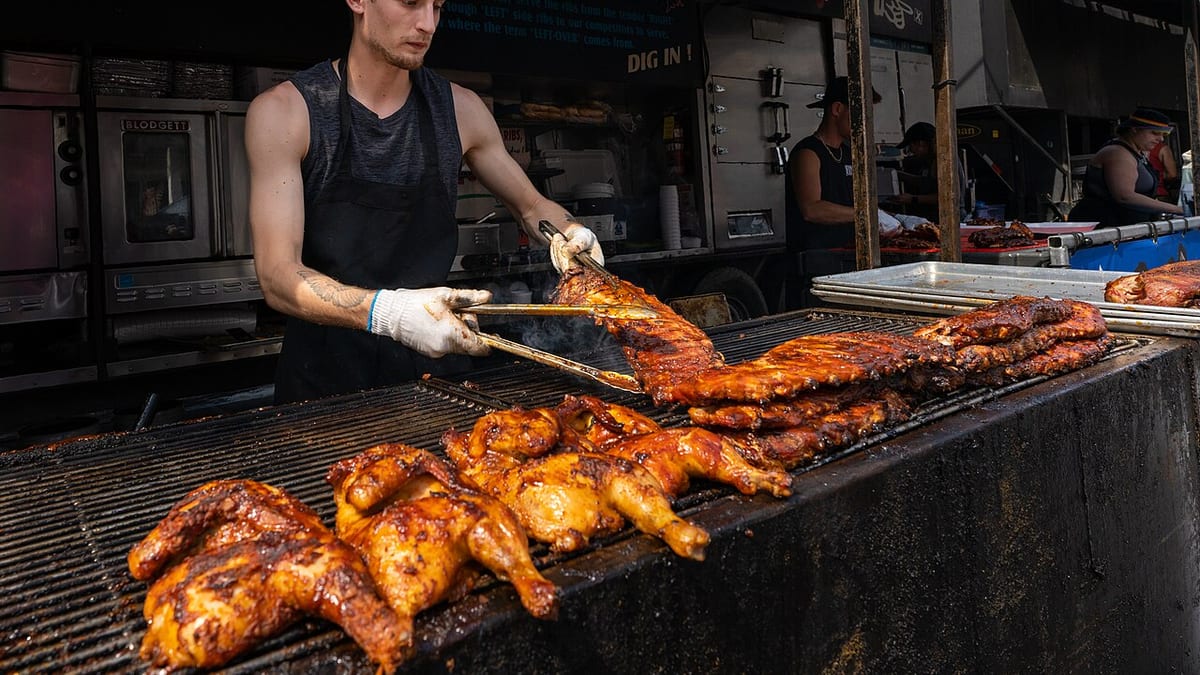
Start eating in Toronto with a market breakfast or lunch, then choose a neighbourhood meal that introduces a different culinary tradition. Peameal bacon sandwiches, Montreal-style bagels, Tibetan momo and contemporary Asian-Caribbean cooking offer a more useful beginning than a checklist of supposedly mandatory Canadian dishes. Plan around actual opening days and current addresses, rather than crossing the city for every meal. [1] [2] [3] [4]
Begin at St. Lawrence Market - but choose the right day
St. Lawrence Market is a practical introduction because several food decisions can be made in one place. The South Market currently opens Tuesday through Sunday and closes on Mondays. The Saturday farmers market has its own schedule, so a recommendation for the market generally should not be read as a promise that every operation runs every day. [5]
Carousel Bakery's peameal bacon sandwich is a logical starting point for someone who eats pork and wants a recognisable Toronto food stop. The market's own vendor listing identifies it with that sandwich; you do not need to order a large spread of unrelated foods to make the visit worthwhile. [1]
St. Urbain Bagel offers a different direction, with Montreal-style bagels. The wording matters: eating a food in Toronto is not evidence that the city invented it. A good food visit can reveal connections between places rather than force every dish into a local-origin story. [2]
My recommendation is to choose one main item, then browse before buying anything else. Sharing a second item can create room for comparison without turning breakfast into the day's only meal. Travellers with different diets can choose separately and meet afterwards rather than expect one stall to serve everybody equally well.
The market is also useful for edible purchases, but distinguish food to eat immediately from products you intend to take home. Storage, luggage and the destination's import rules may change whether a perishable souvenir is a sensible purchase. Do not let an attractive display make that decision for you.
Go west for momo, using the current address
Loga's Corner's official website now gives its home as 1407 Queen Street West. It describes Tibetan momo and lists steamed versions at CA$9 and fried versions at CA$10, with several meat and vegetable fillings. Older saved addresses should not override the restaurant's current directions. [3]
This is a useful budget meal candidate because the decision is clear: choose a filling and the steamed or fried preparation, then decide whether you need a drink or another dish. Prices are the restaurant's published menu figures, not a delivery-platform quote or a guarantee of the final bill.
For two people, two listed steamed orders total CA$18 before any applicable additions. That calculation helps establish the scale of the meal without claiming a particular portion will satisfy every appetite. Order according to your group rather than assuming that a low price requires buying several extras.
Dietary questions should include sauces as well as fillings. The restaurant describes cheese in its signature hot sauce, so a vegetable momo order should not automatically be treated as an entirely vegan meal. Ask about the dumpling, sauce and preparation together. [3]
Make the journey part of a west-end outing rather than a separate cross-city errand between tightly scheduled attractions. A food recommendation becomes much more practical when it fits the route you already want to take.
Reserve a different kind of meal for dinner
Patois describes its cooking as Asian-Caribbean and lists its restaurant at 794 Dundas Street West. Its published service is dinner-led, which makes it a different proposition from a casual market breakfast or a quick lunchtime dumpling stop. [4]
Choose it when you want a seated meal that explores a contemporary combination of culinary influences. That is the basis for including it here - not a claim of personal tasting, a universal quality ranking or an award that has not been independently checked.
Read the current menu before reserving, especially when a group wants to share. Decide whether everyone is comfortable ordering collectively, how dietary restrictions will be handled and whether the table prefers several smaller choices or individual mains.
Do not assume a dish remembered from a photograph remains available. A restaurant's identity can remain consistent while its menu changes. The useful question is whether the current offering suits your meal, not whether it exactly reproduces an older social-media post.
For a short trip, this kind of dinner can balance daytime sightseeing well: reserve the evening meal, then keep lunch flexible. Booking every meal in advance removes the chance to follow an interesting bakery or market discovery without cancelling something else.
Build a food route, not a tasting marathon
One workable plan is a St. Lawrence Market visit on an operating morning, a modest lunch near the day's activities and a reserved dinner on a different culinary theme. On another day, pair the west-end momo stop with time in the surrounding area. This is an editorial sequence, not a pre-arranged tour.
Avoid combining every named stop simply because they appear in the same article. Toronto food lists can encourage readers to spend more time travelling between meals than enjoying them. Three well-chosen experiences can tell you more than ten rushed purchases.
Keep an unplanned slot for a recommendation that arises during the trip. Ask what a restaurant specialises in, what is suitable for one person, or which dishes are intended to share. Those questions are more productive than asking for the single "most authentic" item.
Also separate novelty from suitability. A famous sandwich is not a useful recommendation for someone who does not eat pork. A celebrated restaurant is not good value for a traveller who mainly wants a quick, inexpensive lunch. There is no obligation to order a food simply because it appears on a destination checklist.
Compare the actual meal cost
When assessing menus, compare the same kind of purchase: eat-in with eat-in, takeaway with takeaway, and the same portion size. Delivery charges and platform prices can make an otherwise simple comparison misleading.
For a shared meal, decide whether drinks, desserts and extra sides are part of the budget before ordering. A modest main-course price can coexist with a much larger final bill. Ask the venue to explain any unclear service charge rather than making assumptions about what a suggested payment amount includes.
Dietary requirements deserve equally concrete questions. "Vegetarian," "no meat" and "safe for a particular allergy" are not interchangeable requests. Explain the ingredient or preparation issue and accept that a venue may not be able to accommodate it reliably.
The best starting food plan for Toronto is therefore varied but manageable: one market experience, one casual neighbourhood meal and one dinner chosen for a clear reason. Leave room to discover more once you understand the geography and your own appetite. That approach keeps the city's variety enjoyable rather than turning eating into another exhausting itinerary.