
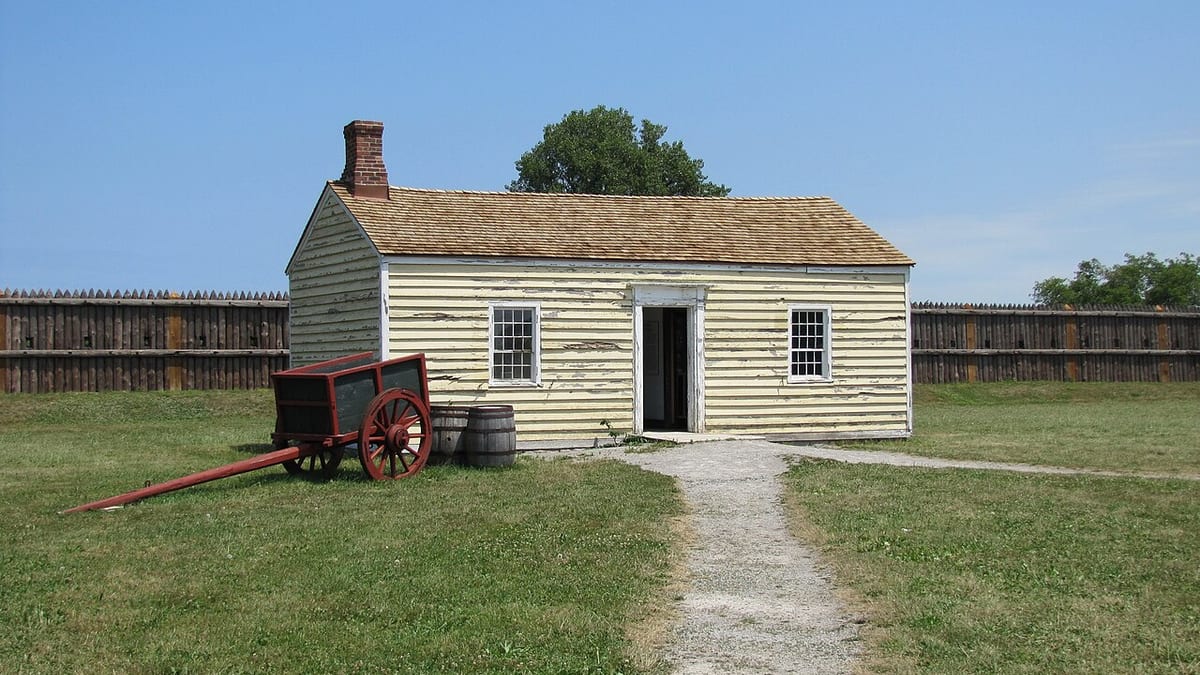
Fort George is worth visiting when military history, reconstructed fort buildings and the story of the Niagara frontier interest you. It makes a strong partner to Niagara-on-the-Lake, but it is not a substitute for seeing Niagara Falls. Choose a date with the interpretation you want, because a seasonal historic-site programme and a walk around the surrounding landscape are different experiences. [1] [2]
What makes this more than a collection of old buildings
The British built Fort George between 1796 and 1803 to defend the Niagara River and the nearby settlement. Its position helps explain why this area mattered during the War of 1812: the river was not simply attractive scenery, but a strategic boundary and route. [3]
The fort was damaged and captured in 1813, and much of the visitor environment reflects a later reconstruction based on historical plans. Parks Canada describes the 1930s work rather than presenting every structure as an untouched survivor. That distinction improves the visit instead of diminishing it. [4]
Look for what the reconstructed spaces help explain: where people lived, how provisions were stored and how a military post functioned between moments of combat. The most interesting question is often how a community operated inside a defensive enclosure, not simply how many guns it possessed.
A visitor who prefers original fabric above all else should take the reconstruction into account. Someone interested in interpretation and the layout of military life may find the recreated environment useful. There is no need to treat one preference as more legitimate than the other.
Choose a programme, not just an opening gate
Parks Canada's visitor material describes interpretation of soldiers' lives and the fort's wartime role. The precise demonstrations and activities can vary with the season and daily programme, so do not assume that every photograph of a firing display or costumed activity represents something available continuously. [1] [3]
A useful arrival question is what will happen during the next part of the day. Build the visit around a demonstration or interpretive talk that interests you, then use the intervals for the buildings. That is more effective than walking the entire circuit first and discovering that the activity you wanted has just ended.
For children, choose a small number of questions to follow. Where did soldiers sleep? How was food prepared? What work happened when there was no battle? A coherent thread can make the site more memorable than trying to read every panel.
For an adult interested in the conflict, allow time to connect the fort with the river and surrounding town. The physical setting gives context that an isolated display case cannot. Keep the distinction between established historical interpretation and imaginative reconstruction clear, especially when taking photographs to explain the visit later.
The current season has a defined endpoint
For 9 September through 1 November 2026, Parks Canada lists opening Wednesday to Sunday, 10:00–17:00, with ticket sales ending at 16:15. This guide is published on 30 October, so that schedule has only a short period left to run; it is not a year-round timetable. [2]
A visit after 1 November needs a subsequently published programme or specific event, not an assumption that the autumn hours continue. The same applies to planning a future spring trip: use that season's dates rather than transferring the 2026 calendar unchanged.
As a suggested allocation, give the paid visit about two hours, increasing it when you want detailed talks and decreasing it only when you are deliberately making a selective circuit. This is a planning recommendation, not a measured average. Entering at the last possible moment is poor value when interpretation is a major reason for buying admission.
Weather also matters because this is not one continuously enclosed museum building. Dress for moving between spaces and for time outdoors. A rainy forecast does not necessarily rule out the visit, but it changes the balance between the fort, a meal in town and other activities.
What admission and parking add up to
The published regular adult admission is CA$14.75, with CA$12.50 for seniors aged sixty-five and above; visitors aged seventeen and under are admitted free. Parking is listed separately at CA$9.50. The summer 2026 free-admission promotion ended on 7 September and should not be used to budget an autumn visit. [5]
For two full-price adults arriving in one vehicle, admission and the listed parking charge total CA$39. A family with two adults and children qualifying for youth admission reaches the same total before food or other purchases. These are calculations from the posted tariff, not a bundled family ticket.
Free youth admission can make the fort a comparatively manageable family outing, but only when the subject suits the children. A low entry cost does not compensate for an itinerary that has already exhausted their interest or energy.
For visitors holding a Parks Canada pass, verify its coverage for the specific admission and keep parking separate in the calculation. Do not assume that a pass described as covering entry also removes every vehicle or programme charge.
Combine it with the town, not an overloaded Niagara day
Fort George belongs naturally with Niagara-on-the-Lake. Plan the fort as the main historical activity, then leave time for a town walk or meal instead of adding several distant attractions because they all carry the word "Niagara." [1]
A day that already includes transport from Toronto, the falls, a boat attraction and multiple stops may leave very little useful time for the fort. In that situation, choose your priority. A rushed exterior photograph is not the same as the interpreted visit that makes admission worthwhile.
The associated battlefield also needs careful wording. Parks Canada identifies a separate commemorative battlefield area, with a cairn and plaque rather than surviving remains of the battle itself. Do not arrive expecting another intact fort complex or assume a battlefield walk replaces the exhibits and programming. [6]
Visitors with mobility needs should ask Parks Canada about the current route through the particular buildings and outdoor surfaces they wish to use. A general description of a historic site does not establish that every threshold and activity works equally well for every mobility aid.
Fort George is at its best as a purposeful historical visit with enough time for interpretation. Go when the programme and season match your interest, keep the reconstructed nature of the site in mind, and let it complement Niagara-on-the-Lake rather than compete with every other attraction in the region.