To get from central Toronto to Scarborough Bluffs, first choose the exact park. For Bluffer's Park and Beach, the TTC route is Line 2 to Kennedy, followed by the seasonal 201 bus when operating, or the 12 Kingston Road bus plus an approach walk. A taxi or car is simpler when that final walk does not suit your group.[1]
Use the beach address, not a general Bluffs map pin
Bluffer's Park and Beach is at 1 Brimley Road South, below the cliffs.[1] A navigation result for an upper park is not an equivalent drop-off point. This matters whether you are using a journey planner, arranging a driver or meeting friends who travelled separately.
Save the full destination and agree whether the outing is beach-level or viewpoint-level. A short message containing only "meet at the Bluffs" leaves too much room for everyone to arrive somewhere different.
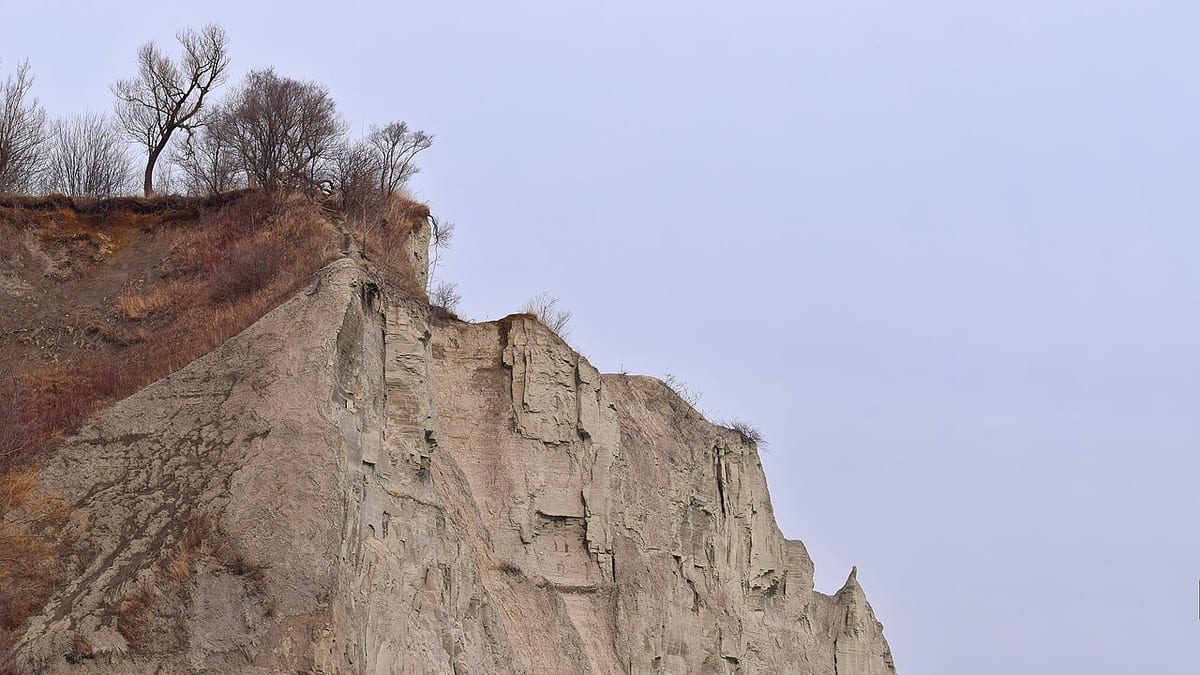
The city warns that the cliff edge is unstable and that visitors must remain behind fences.[2] Do not fix a wrong destination by attempting an informal descent. Correct the journey through the road and permitted path network instead, even when the water looks close from above.
For the rest of this guide, the destination is Bluffer's Park and Beach. Trips to other parks along the Bluffs need their own route calculation; the same bus stop should not be presented as universally convenient for all of them.
The straightforward public-transport route
From the city centre, connect to Line 2 and travel east to Kennedy Station. When the 201 Bluffer's Park seasonal bus is operating, it continues to the beach loop. The TTC's alternative directions are to take the 12 Kingston Road bus from Kennedy to Kingston Road at Brimley Road West Side, then head south along Brimley Road South.[1]
Those alternatives have different physical demands. The seasonal beach bus is attractive because it removes the need to treat the approach road as part of the walk. The 12 bus gets you to the upper road junction, not to the same lower destination.
Before setting off, enter your actual departure address and travel date in the TTC planner. The journey to Kennedy differs substantially depending on where you are staying, and a downtown hotel near one subway line should not be assigned the same door-to-door time as an apartment elsewhere in Toronto.
Save the route while connected, but use current service information on the day. A screenshot is a useful backup for stop names; it is not a substitute for learning about a disruption or a seasonal route ending.
For payment, the adult PRESTO or credit/debit fare is CA$3.30 under the TTC's current fare structure, with a two-hour transfer period. A return made after that period normally creates another paid fare window, so CA$6.60 is a simple adult round-trip illustration when each direction fits the applicable transfer rules.[3] It is not a separate special Bluffs ticket.
The seasonal-bus detail that needs a date, not a guess
The TTC's visitor page describes the 201 as seasonal, generally from early May to early October. Its seasonal-service notice says weekday operation ended on 8 September 2026 while weekend and holiday service continued.[1][4] These pages do not provide a sufficiently clear basis to promise a beach bus for every later October or November date.
The practical answer is to verify the specific date in the route planner rather than choosing whichever general sentence produces the most convenient itinerary. For a November visit, build a workable alternative before relying on the 201.
This is especially important for the return. An outbound result can look convenient while the last useful inbound journey is earlier than your planned departure from the park. Search the trip back as a separate journey, using the time you expect to leave the beach rather than simply reversing the morning directions in your head.
Do not copy an old route number from a blog without comparing it with the TTC's current listing. The relevant service is currently identified as 201 Bluffer's Park.[4] Historic information can remain highly visible even after the route presentation changes.
Decide whether the approach walk works for everyone
The bus-plus-walk option is reasonable only when the approach and return suit the whole party. Assess it as a transport segment in addition to the walking you want to do beside the water.
For a family, that means accounting for children who may be enthusiastic on the way down and tired afterward. For someone using a mobility aid, it means looking at the actual route and arranging appropriate access rather than assuming that a park described as accessible has an equally manageable approach from every bus stop.
Pack according to the journey. Carrying water, a light meal and a layer is different from transporting chairs, sports equipment and a large picnic cooler. A route that looks economical on a map can become an unpleasant choice when the group is carrying more than it can comfortably manage.
My recommendation is to use the beach-level bus when confirmed for your date, or a vehicle for the final segment when the approach walk is a concern. There is no need to turn a relaxing lakeside visit into a test of endurance to save one additional transport charge.
Driving, taxis and a useful hybrid option
A car offers control over arrival and departure, but the destination still needs to be exact. Follow current signs to legal parking rather than assuming a residential street above the park is an overflow lot. The city identifies parking facilities at Bluffer's Park, while nearby Bluffs parks have different arrangements.[2]
Compare the complete cost with your alternatives: vehicle hire if needed, fuel, parking and the return journey. Renting a car solely for a brief visit may make less sense than using public transport for most of the journey and a taxi for the difficult last segment.
A taxi or rideshare is useful for a group that needs a direct lower-park drop-off. The limitation is that an app estimate is not a guaranteed future return fare or a reserved vehicle. Save a clear pickup point and allow time for the driver to reach it.
A hybrid journey can be a reasonable compromise: travel by TTC toward the area, then use a prearranged vehicle for the final approach or the return climb. Confirm that the pickup location is accessible to the driver and that everyone understands which side of the cliff they are meeting on.
Plan the return before the photographs
For a daylight outing, work backward from the time you want to be back in the city. Leave room for walking to the stop or pickup point, waiting and any connection. A scheduled evening meal or performance downtown is a reason to end the Bluffs visit earlier, not to assume the fastest possible journey will happen.
Do not turn a train or bus timetable into a promise about door-to-door travel. The relevant duration includes reaching the station, the final approach and the return from wherever you actually finish your walk. No single downtown-to-Bluffs time is reliable for every traveller.
The best route is therefore conditional but clear: Line 2 and the 201 when the beach service is confirmed; Line 2, the 12 and a manageable walk when it is not; or a car or taxi when the final approach changes the experience for your group. Choosing the right endpoint and return plan matters more than finding the route with the fewest minutes on a generic search result.